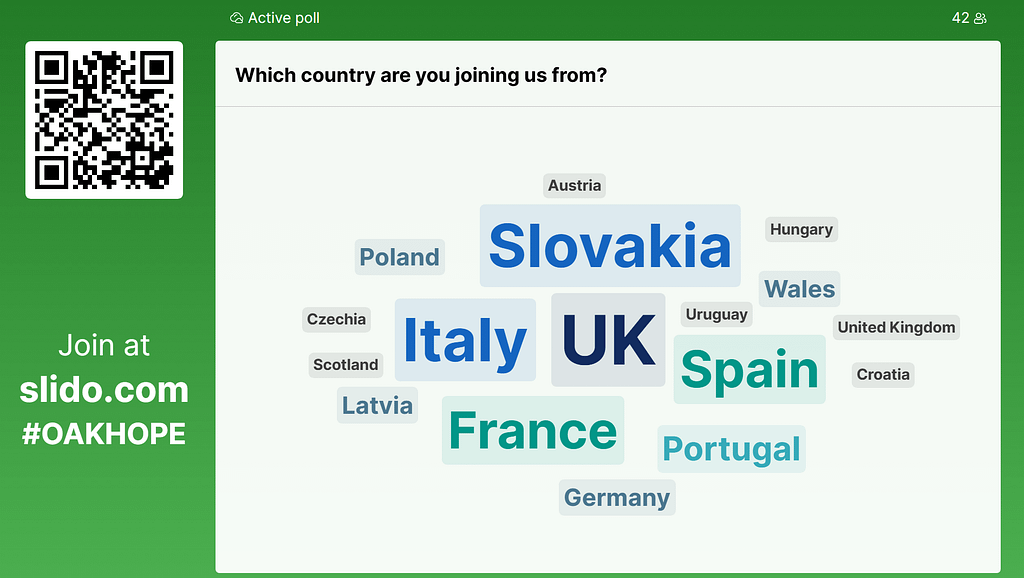
On Tuesday 27 January 2026 the OAK-HOPE network gathered online for a webinar exploring management strategies for oak resilience. The audience, which peaked at around 70, was truly international, with participants calling in from all over Europe and even South America. This represents around a third of our network members showing the enthusiasm for opportunities to connect and learn about how to protect oak trees and their ecosystems.
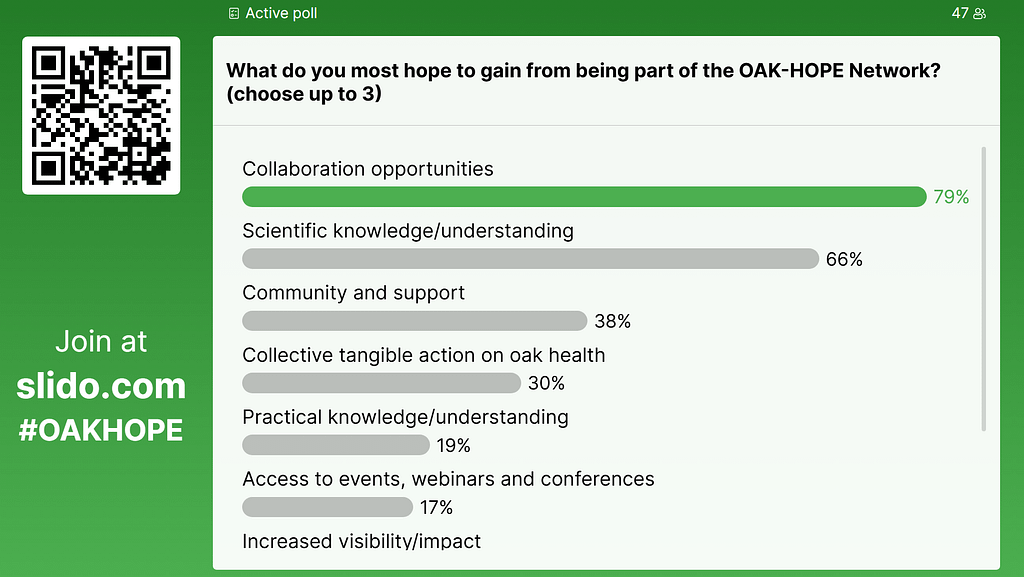
We invited the audience to share what they most want to get out of being part of the OAK-HOPE network and it is clear that, along with hearing about the latest science, collaboration and community are high on the wish list. There is also a strong desire for collective action on oak health.
Our audience were international, and our speakers were too – sharing insights on oak resilience from Slovakia, the United Kingdom and France.
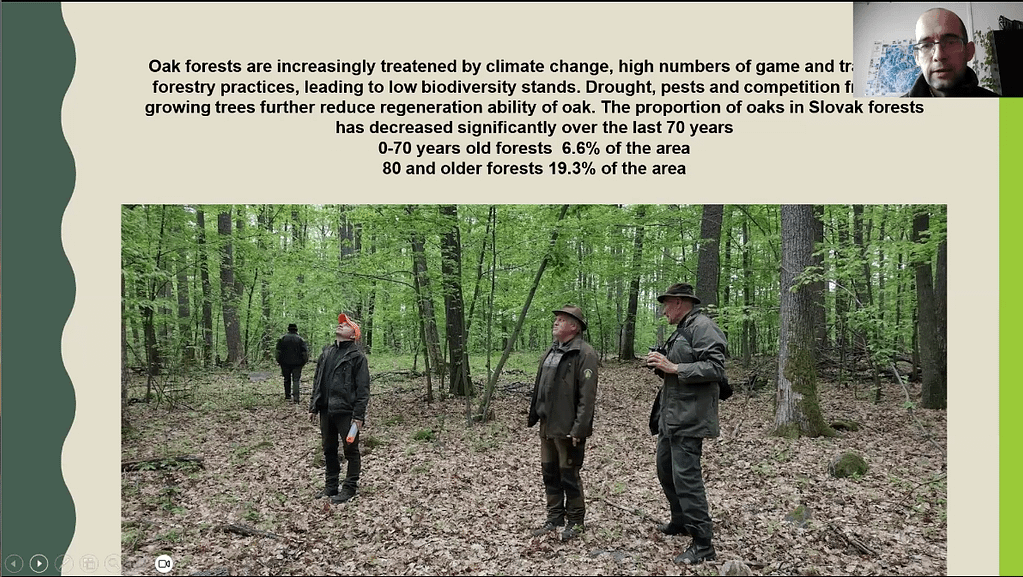
Our first speaker was Jozef Capuliak, a forester and manager of the Municipality Forests of Krupina, Slovakia. Jozef shared the history of the oak-beech forests he manages, which were preserved for community use by leaders including King Bela IV (13th Century) and Empress Maria Theresa (18th Century). However, the oak trees in these forests are being increasingly impacted by climate change, drought, pests and competition from faster growing trees. To tackle Jozef shared how they have been experimenting with ‘close-to-nature’ regeneration and management practices.
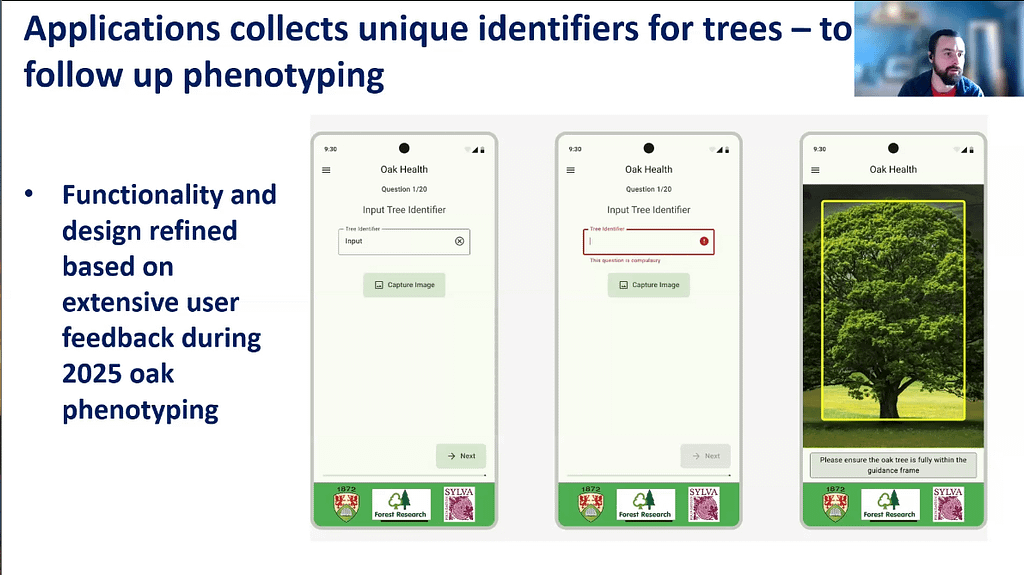
Up next was Thomas Wilson, a researcher from University of Aberystwyth, UK. Thomas described the Forest Lab project, a collaboration between the university, Forest Research and the Sylva Foundation, which is using digital tools to empower citizen and steward scientists to monitor the health of oak woodlands. The researchers have developed an app which allows users to collect and submit data on oak health such as crown condition and tree height. They are comparing this data with results from trained surveyors to refine the process and ensure user-submitted reports are reliable enough.
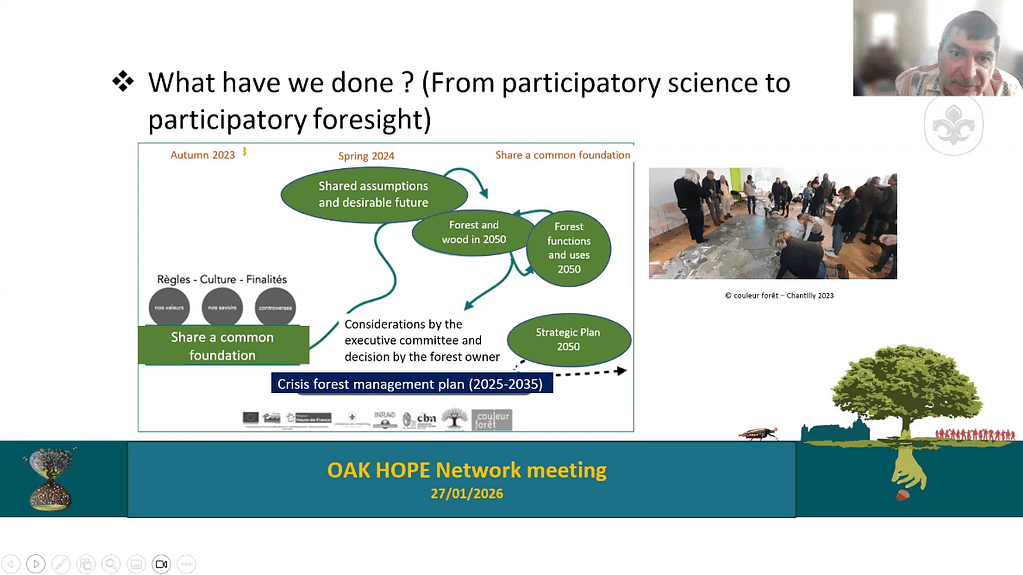
Last but not least came Laurent Saint-Andre. Laurent works for INRAE in France and presented research from the Chantilly forest which is experiencing a massive decline in oak trees. Since 2020 they have been running a holistic study to understand and tackle this decline, with contributions from foresters, geneticists, ecologists, soil scientists, entomologists, ecophysiologists and citizen scientists. It presents a complex and multi-factorial picture, but points to useful actions like careful selection of tree species for future planting. The research team are now working with stakeholders to develop a ‘crisis forest management plan’ and continue monitoring the forest.
To find out about upcoming webinars like this and other events, do remember to check the Events page. If you know other people who would like to join the OAK-HOPE network send them this link . Membership is free and open to everyone who cares about oak tree health.