Oak enthusiasts joined our webinar on Wednesday 25 February 2026 from across the world, united by their concerns for how our changing climate is impacting oak trees. The webinar included three speakers who have been monitoring and trying to manage the impacts of climate change, especially drought.
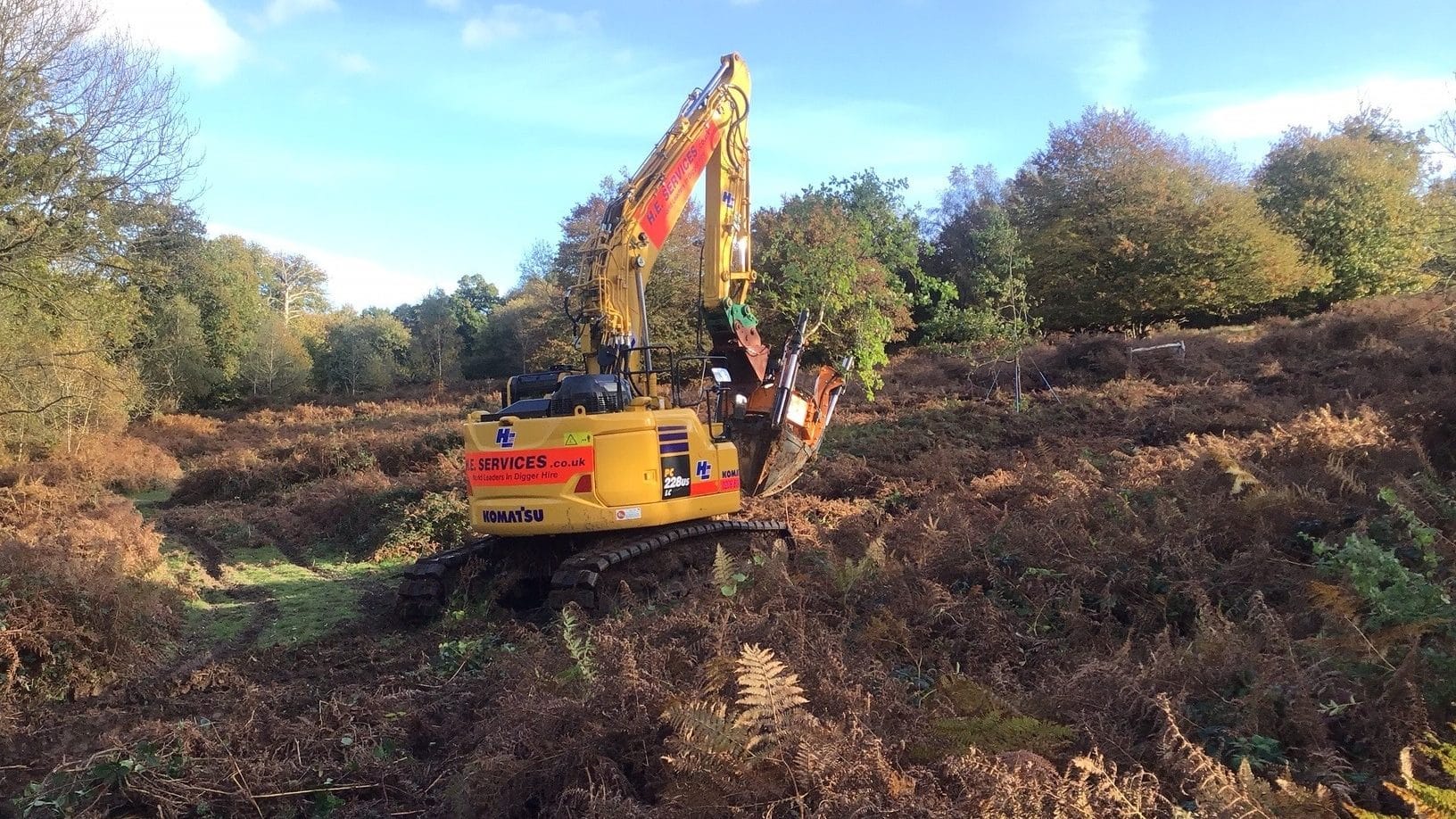
First up we heard from Jonathan Ireland of the UK’s National Trust. Jonathan is Lead Ranger for several sites in North Kent including Cobham Woods. Cobham Woods is a Site of Special Scientific Interest (SSSI) due to the diversity of saproxylic invertebrates which thrive in the pockets of decay and deadwood found amongst the site’s veteran oaks. Unfortunately Acute Oak Decline (AOD) and Chronic Oak Decline (COD) are hastening the decay of the trees. Jonathan shared some of the techniques they have been using to try and support natural regeneration including mulching, no fence grazing (with the splendid Highland cattle in the header image) and relocating younger oak trees. After the talk Jonathan asked the audience for other actions they might consider and suggestions included monitoring the soil chemistry and sourcing more heat-tolerant species for new planting.
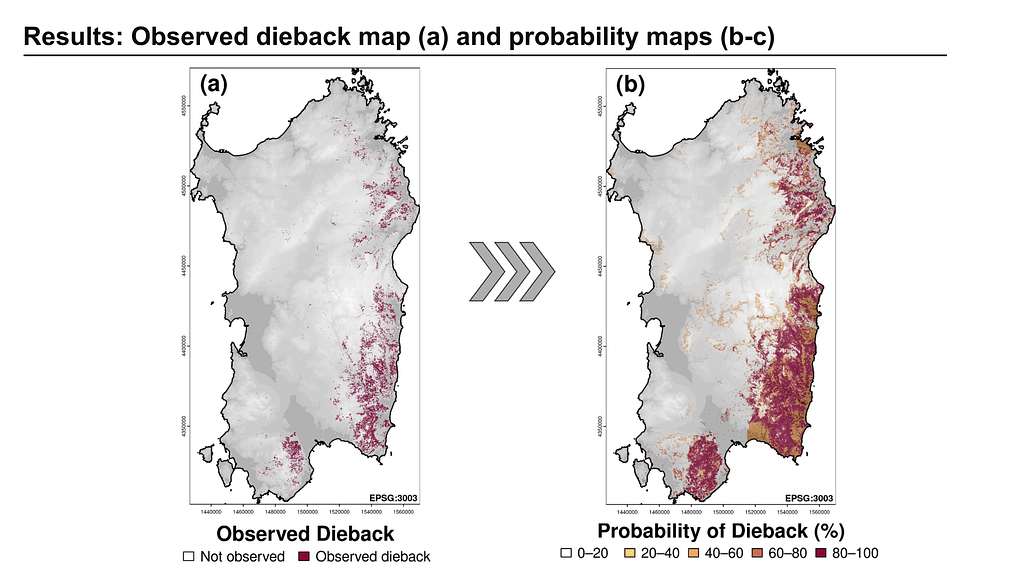
Our second speaker, Gabriele Satta from the University of Sassari shared his research on detecting and modelling drought-induced holm oak dieback various sites across Italy. This work used satellite imaging to create a map of dieback in 2023 to 2024 and combined this with information about the climate, topography, vegetation and soil to create a model. He found that the most predictive markers of dieback were primarily climate, but also microtopography and tree cover density. This model can create probability maps to predict vulnerable areas and help prioritise monitoring and mitigation.
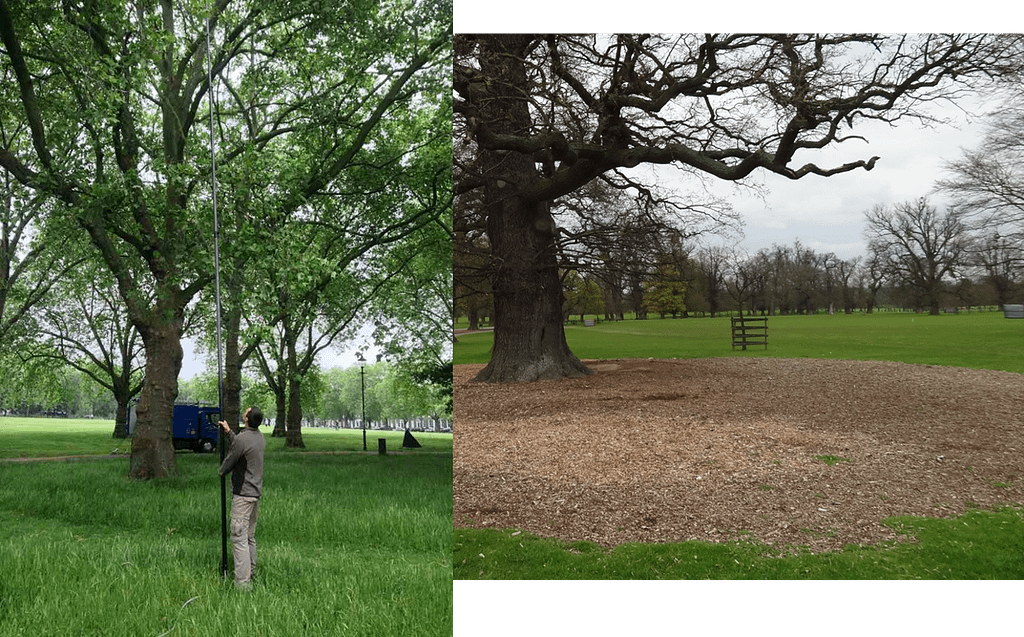
Our final speaker, Matt Searle of Treework Environmental Practice, took us back to the veteran oaks of Kent, UK, but with a different focus. In 2024 Matt led a specialist team who surveyed 1,400 ancient and veteran trees (including 220 oaks), across 18 sites in the North Kent Woods and Downs National Nature Reserve. Each tree was given a ‘viability score’ which indicated how likely they are to suffer physiological decline or structural collapse in the next 10-15 years. 30% of the trees surveyed were given a moderate viability score meaning they are at risk but can be saved. Matt then explained some of the strategies being used to try and save these trees, in particular using mulch, compost tea and micro-organisms to bolster the roots of these trees.
To find out about upcoming webinars like this and other events, do remember to check the Events page. If you know other people who would like to join the OAK-HOPE network send them this link . Membership is free and open to everyone who cares about oak tree health.